Picture golden light sliding across avocado rows, the hum of a small workshop, and quiet evenings under a sky full of stars. If you dream about space to spread out, plant a grove, or keep horses, Fallbrook’s acreage can be a great fit. At the same time, living on land here comes with real logistics, from water and septic to wildfire readiness and road maintenance. In this guide, you’ll learn what daily life looks like on acreage in Fallbrook, plus the key checks to make before you buy so you can move forward with confidence. Let’s dive in.
Fallbrook at a glance
Fallbrook is an unincorporated community in northern San Diego County with rolling hills, orchards, vineyards, and a historic village center. The County’s community plan describes Fallbrook as largely agricultural and semi rural, with many parcels devoted to crops and equestrian uses. You can get a feel for that land-first identity in the area’s official planning documents from the San Diego County community plan.
By population, Fallbrook is a small town by regional standards. The U.S. Census reported about 32,267 residents in the 2020 count, covering a mix of village lots near Main Avenue and larger rural holdings outside town. You can see the latest estimate in Census QuickFacts for Fallbrook.
What living on land feels like
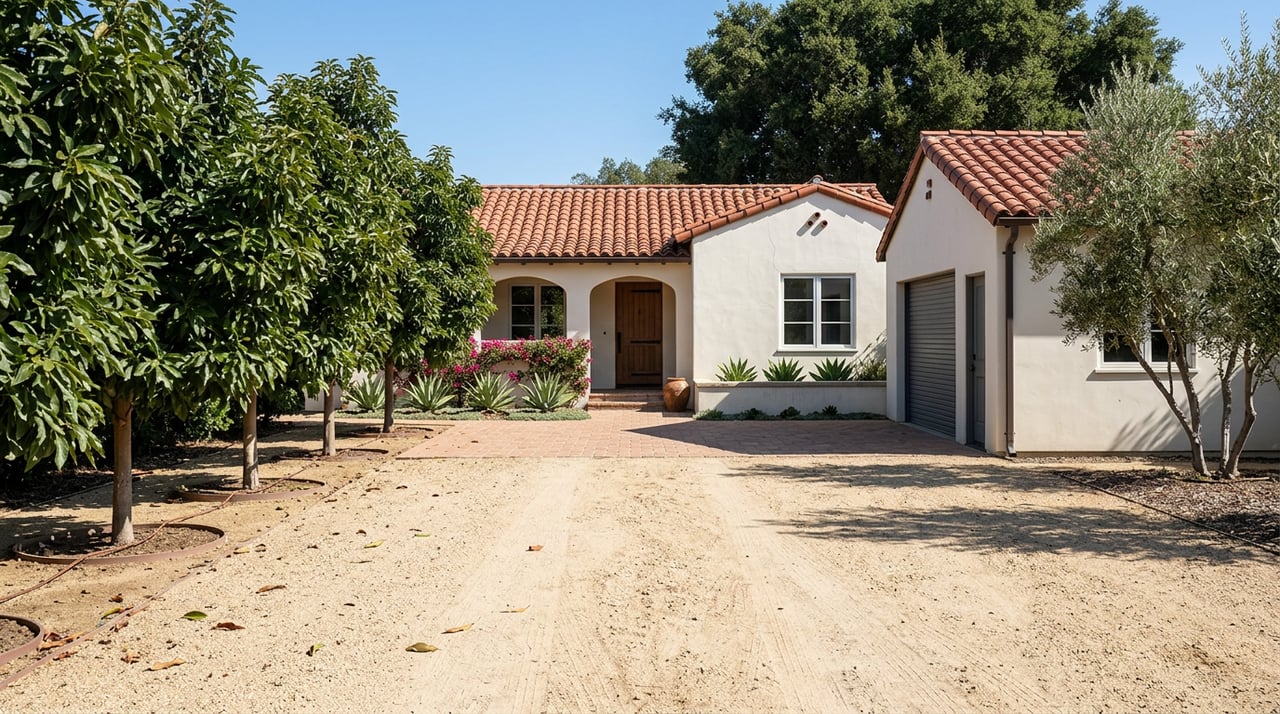
On acreage, you’ll see rows of avocado and citrus, small vineyards, and equestrian facilities with arenas and barns. Many properties include accessory buildings like workshops, sheds, and extra garages for equipment. Evenings tend to be quiet, and homes often sit back from the road, oriented to capture views and breezes.
Architecturally, expect ranch, farmhouse, and Spanish-influenced homes alongside newer custom builds and remodeled ranch properties. Lot coverage and setbacks differ from suburban neighborhoods, so a home may sit deeper on the parcel to serve the land’s use.
Lot sizes, zoning and uses
Fallbrook offers a wide range of lot sizes, from small village parcels to multi-acre groves and ranches. In rural areas, you’ll commonly see agriculture or limited-agriculture designations, including the A70 agricultural use code. Because San Diego County separates use regulations from other design elements, the exact allowances for structures, animals, and setbacks are parcel specific.
- Always check the County record for your parcel’s use regulations and any overlays such as steep-slope or fire designations. Start with the County’s zoning layers and parcel details through the San Diego County zoning map service.
- Do not assume what you can do based on a neighbor’s property. Confirm your own APN’s allowances before planning projects.
Utilities and daily logistics
Water and wastewater
In many neighborhoods, water is supplied by the Fallbrook Public Utility District (FPUD), which also manages wastewater treatment capacity in parts of the area. Adjacent areas are served by Rainbow Municipal Water District. Some rural parcels rely on private wells and onsite septic systems depending on location. Your first due-diligence step is to confirm the water source and sewer status for the exact address. Learn more about district services from the Fallbrook Public Utility District.
For homes not on public sewer, San Diego County regulates onsite wastewater systems under an updated Local Agency Management Program. The County has specific rules for percolation testing, reserve areas, repairs, and new system design. Before you buy, request septic permit history and as-built records, and plan for an inspection and pumping as part of routine home care. The County also permits and oversees private wells and water sampling. See the County’s resources for septic systems and water wells.
Electricity, gas and propane
Regional electric service is provided by SDG&E. On larger parcels, service drops or meter extensions may require trenching or pole work, and some homes use propane for appliances or heating. If you plan to build or add significant loads, contact the utility early to understand costs and timelines.
Internet and phone
Connectivity varies by address. Cable and fiber reach many but not all pockets, and where wired service is limited, residents often use fixed wireless or satellite. Always verify availability at the exact address, especially if you plan to work from home. You can check options by address using BroadbandNow’s Fallbrook page.
Trash, recycling and bulky pickup
Curbside service is provided by EDCO in Fallbrook, with trash, recycling, organics, and special or bulky item programs. Schedules and set-out rules differ from city service, so review the local guidelines through EDCO Fallbrook.
Emergency services
Fire protection and advanced life support ambulance services are provided by the North County Fire Protection District. Law enforcement is through the San Diego County Sheriff. Fallbrook no longer has a full acute-care hospital in town, so ambulances transport to nearby hospitals such as Tri-City in Oceanside or Temecula Valley, depending on the incident and traffic. For address-specific questions about response and routing, start with the North County Fire Protection District.
Wildfire, maintenance and insurance
Wildfire and defensible space
Much of Fallbrook falls within mapped wildland-urban interface or fire-hazard zones. If you are buying or selling a home in a High or Very High Fire Hazard Severity Zone, California requires a defensible-space inspection report during the sale process under AB 38. Local fire agencies coordinate these inspections and provide guidance on vegetation management, ember-resistant improvements, and driveway access for fire apparatus. See AB 38 guidance from the North County Fire Protection District.
Day-to-day acreage upkeep
Large lots require regular care. Plan for:
- Irrigation checks and repairs for groves and landscaping, plus seasonal watering adjustments to control costs.
- Septic inspections and pumping if you are on an onsite system, along with watching for signs of saturation or backups after heavy rain.
- Road and driveway upkeep, including grading for unpaved stretches and culvert clearing before storms.
- Fuel-reduction work to maintain defensible space, such as pruning, limbing up trees, and clearing roof and gutter debris.
- Crop-specific tasks if you manage avocados or citrus, like pruning, frost protection on cold nights, and basic pest monitoring.
For water use planning and conservation programs, visit FPUD’s services page.
Insurance considerations
Wildfire exposure has tightened California’s homeowner insurance market. Premiums and availability can vary widely based on your parcel’s location, fire-hazard severity, and mitigation measures. To avoid surprises, get quotes early in the purchase process and share any defensible-space work you have completed. The California Department of Insurance provides updates on carrier participation and consumer guidance. See recent updates from the California Department of Insurance.
Lifestyle, arts and getting around
One of Fallbrook’s best features is the balance between rural space and a small-town center. The village core offers independent shops, galleries, and seasonal events, with an active arts community through the Fallbrook Art Center. It is easy to spend a Saturday strolling galleries, tasting local wine, and stocking up at farm stands before heading back to your quiet hilltop.
Local schools and services are nearby, including elementary and high school districts that serve different parts of the area. There is also a Palomar College North Education Center near town for community education and convenient college-level courses. For families, it is best to confirm which district your specific address falls within. Start with the Fallbrook Union High School District enrollment page.
Fallbrook is a drive-first community. Regional partners have explored on-demand transit pilots, but most commutes and errands happen by car. Expect to drive to Oceanside, Temecula, or Escondido for many services and jobs. For local transit discussions and pilots, see this overview of recent efforts from Everything Fallbrook.
Buyer checklist for acreage in Fallbrook
Use this practical checklist as you evaluate properties. Ask for documents early, ideally before you tour.
- Zoning and allowed uses. Pull the parcel’s use regulation and any overlays. Verify animal allowances, setbacks, slope restrictions, and easements for your exact APN through the County zoning map service.
- Water source and capacity. Confirm if the property is on FPUD or Rainbow service or a private well. For wells, request completion reports, pump tests, and recent lab results. For district connections, ask FPUD about service conditions and fees. Start with FPUD’s services.
- Septic system documentation. Request the County’s permit history, septic as-built, and any repair or upgrade permits. If you plan to add bedrooms or an ADU, ask whether the existing system can support it or if an engineered design will be required. See the County’s septic and well program.
- Fire and defensible space. Check the property’s fire-hazard designation, request recent defensible-space inspection reports, and ask the local fire prevention bureau what ongoing fuel-reduction work is expected. Begin with NCFPD’s AB 38 page.
- Access and road maintenance. Verify recorded access easements and any private road maintenance agreements. Long or unpaved driveways can affect emergency access and budgets.
- Utilities and broadband. Confirm the electric service point, meters, and whether trenching or transformer work is likely for new loads. Check address-level internet options at BroadbandNow before you count on remote work.
- Market positioning. Large-lot agricultural and equestrian properties attract a more specific buyer pool than in-town homes. They can hold value for lifestyle buyers but may take longer to resell. Compare against recent sales of similar acreage rather than broad county medians.
Questions to ask before you tour
- What is the APN and current County zoning use regulation for this parcel?
- Is the property on district water or a private well? Can I review well tests and water quality reports?
- Is there a septic as-built on file and recent pumping or inspection records?
- Has the property had a defensible-space inspection in the last 12 months?
- Are there recorded access easements or private road agreements I should review?
- What internet providers serve this exact address?
Is living on land right for you?
If you want space, privacy, and the freedom to shape a property, Fallbrook’s acreage delivers. You will trade some city conveniences for hands-on maintenance and planning, and you will budget for things like irrigation, road upkeep, and defensible space. With strong due diligence and a clear understanding of utilities, you can enjoy a rewarding, grounded lifestyle surrounded by orchards and open hills.
If you are weighing specific parcels or planning improvements, let a local expert help you align your wish list with what the land and zoning allow. For personal guidance, neighborhood context, and a clear plan to buy or sell acreage with confidence, connect with Lynn Rinner. I am here to help you love where you live.
FAQs
What utilities are typical for rural Fallbrook homes?
- Many homes use district water from FPUD or Rainbow, private wells in some areas, electric service from SDG&E, propane for some appliances, and onsite septic systems where public sewer is not available.
How does wildfire risk affect buying in Fallbrook?
- Much of Fallbrook sits in fire-hazard zones, so you should plan for defensible space, ember-resistant upgrades, and an AB 38 inspection during a sale; get an insurance quote early because availability and premiums vary by location.
Can you keep horses or plant a vineyard on Fallbrook acreage?
- Often yes, but it depends on your parcel’s zoning and overlays; confirm allowances for animals, structures, and agricultural uses with the County’s records for your APN via the zoning map service.
Is high-speed internet available on acreage in Fallbrook?
- Coverage varies by address, with cable or fiber in many pockets and fixed wireless or satellite options elsewhere; check exact availability through BroadbandNow before you rely on remote work.
Where do Fallbrook ambulances take patients in emergencies?
- North County Fire provides advanced life support and transports patients to nearby acute-care hospitals such as Tri-City or Temecula Valley based on the incident and traffic; contact the North County Fire Protection District for routing questions.